 Nano Banana · Text only
Illustration & art / MeiGen
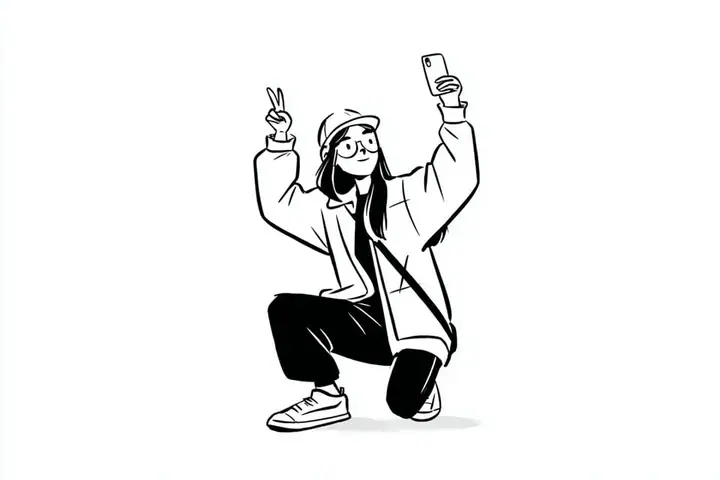
Notion 风格的黑白动作人物插画
Complete source prompt, creator credits and original-source links.
Read the complete source prompt and attribution. Titles and source text retain their original language.
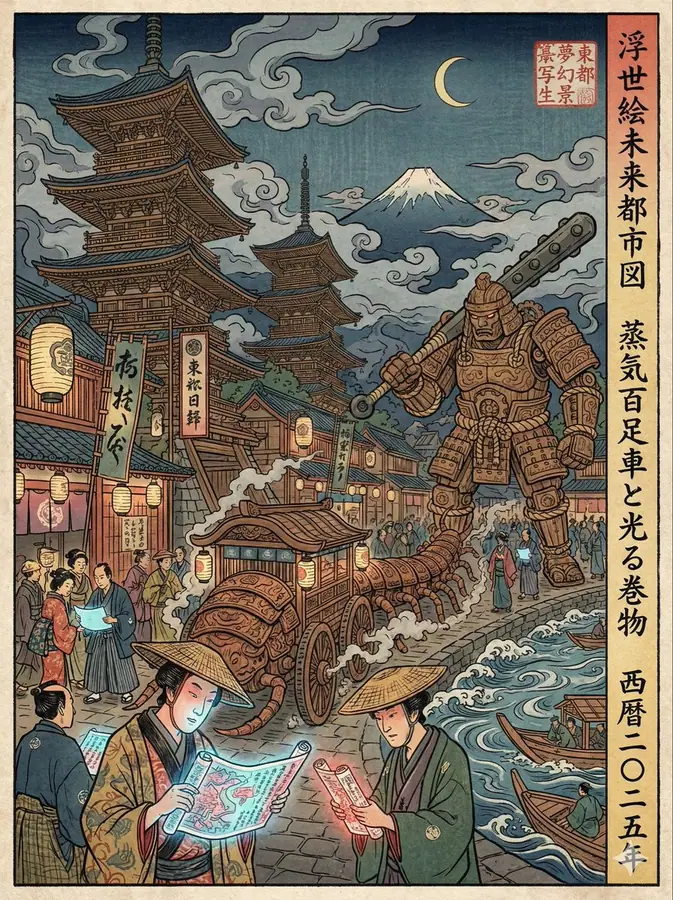
A Japanese Edo-period Ukiyo-e woodblock print. The overall feeling is a surreal collaboration between masters like Hokusai and Hiroshige, reimagining modern technology through an ancient lens.

**The scene:** a busy Shibuya scramble crossing

**Edo transformation logic:**
Characters wear Edo-era kimono but perform modern actions. All technology is transformed into surreal Edo equivalents:
* Smartphones are glowing, illustrated paper scrolls being read intently.
* Metro stations and trains are giant articulated wooden centipede carriages shuffling through crowds.
* Skyscrapers are reimagined as endless, towering wooden pagodas reaching into dramatic clouds.
* Robots and mecha appear as giant, armored woodblock golems.

The composition uses a flattened perspective with large, bold, hand-carved ink outlines. The background features heavily stylized Ukiyo-e wave patterns and dramatic, swirling clouds, with a distant Mt. Fuji visible on the horizon.

The image must look like a physical print, not a digital painting.
* Texture: strong visible wood grain texture and rough paper fibers throughout the piece.
* Printing imperfections: pigment bleeding is evident. Simulate hand-pressed plates with slight color misalignment for authenticity.
* Color palette: strictly limited to traditional mineral pigments, with dominant use of Prussian blue, vermilion red, and muted yellow ochre.
* Lighting: soft, flat, shadow-free lighting with no digital gradients.

Aspect ratio is 3:4 vertical poster. Include vertical Japanese calligraphy describing the scene and a traditional red artist seal stamp in a corner.
一幅日本江户时代的浮世绘木版画。整体感觉是葛饰北斋和歌川广重等大师的超现实合作,通过古老的视角重新构想现代科技。

**场景:** 繁忙的涩谷十字路口

**江户时代转换逻辑:**
人物身着江户时代的和服,但进行着现代活动。所有科技都被转化为超现实的江户时代等效物:
* 智能手机是发光的、精心绘制的纸质卷轴,人们正聚精会神地阅读。
* 地铁站和火车是巨大的铰接式木制蜈蚣车厢,在人群中穿梭。
* 摩天大楼被重新构想成无尽的、高耸入云的木制宝塔,直插戏剧性的云层。
* 机器人和机甲则以巨大的、身披盔甲的木版傀儡形象出现。

构图采用扁平透视,带有粗大、醒目的手刻墨线轮廓。背景是高度风格化的浮世绘波浪图案和戏剧性的漩涡状云朵,远处地平线上可见富士山。

图像必须看起来像一幅实物版画,而非数字绘画。
* 纹理:整个作品中都有清晰可见的木纹纹理和粗糙的纸纤维。
* 印刷缺陷:颜料渗色明显。模拟手工压制版画,带有轻微的颜色错位,以增加真实感。
* 色彩调色板:严格限于传统的矿物颜料,主要使用普鲁士蓝、朱红色和柔和的赭黄色。
* 光照:柔和、平坦、无阴影的光照,没有数字渐变。

宽高比为 3:4 的竖向海报。包含描述场景的竖排日文书法,并在一个角落有一个传统的红色艺术家印章。
A Japanese Edo-period Ukiyo-e woodblock print. The overall feeling is a surreal collaboration between masters like Hokusai and Hiroshige, reimagining modern technology through an ancient lens.

**The scene:** {argument name="modern scene" default="a busy Shibuya scramble crossing"}

**Edo transformation logic:**
Characters wear Edo-era kimono but perform modern actions. All technology is transformed into surreal Edo equivalents:
* Smartphones are glowing, illustrated paper scrolls being read intently.
* Metro stations and trains are giant articulated wooden centipede carriages shuffling through crowds.
* Skyscrapers are reimagined as endless, towering wooden pagodas reaching into dramatic clouds.
* Robots and mecha appear as giant, armored woodblock golems.

The composition uses a flattened perspective with large, bold, hand-carved ink outlines. The background features heavily stylized Ukiyo-e wave patterns and dramatic, swirling clouds, with a distant Mt. Fuji visible on the horizon.

The image must look like a physical print, not a digital painting.
* Texture: strong visible wood grain texture and rough paper fibers throughout the piece.
* Printing imperfections: pigment bleeding is evident. Simulate hand-pressed plates with slight color misalignment for authenticity.
* Color palette: strictly limited to traditional mineral pigments, with dominant use of Prussian blue, vermilion red, and muted yellow ochre.
* Lighting: soft, flat, shadow-free lighting with no digital gradients.

Aspect ratio is 3:4 vertical poster. Include vertical Japanese calligraphy describing the scene and a traditional red artist seal stamp in a corner.Start from the source text. Add your own authorized reference for a specific person, logo or product when needed.
Change one element at a time. Keep useful composition and lighting, and use your own reference material when required.
Structure: [Subject] + [Composition] + [Light] + [Material or style] + [Text or details to preserve] + [Aspect ratio]
Examples were not regenerated by this site. Results vary with tools, model versions, references and editing rounds.Sources & methods
Nano Banana · Text onlyComplete source prompt, creator credits and original-source links.
 Nano Banana Pro · Reference required
Complete source prompt, creator credits and original-source links.
 Nano Banana Pro · Text only
Complete source prompt, creator credits and original-source links.